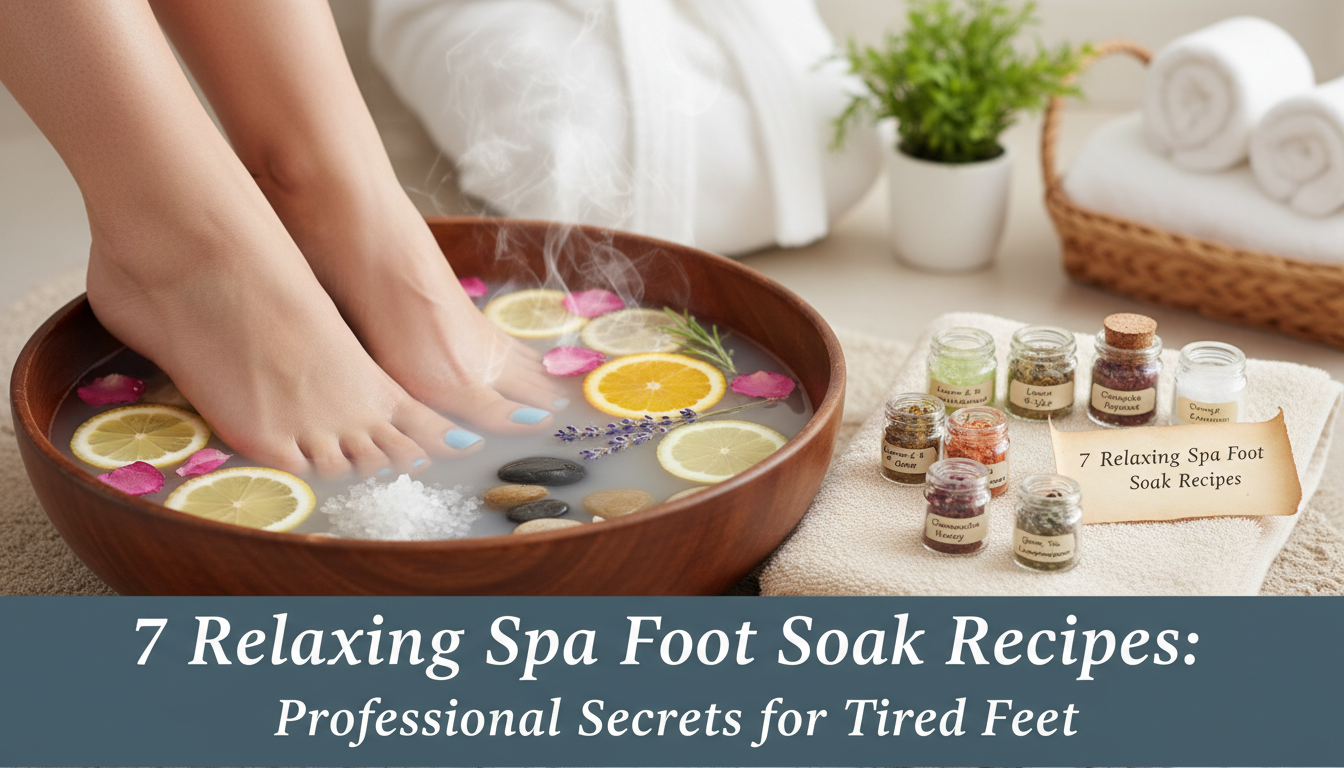
After a long day spent navigating the demands of work, fitness, or errands, your feet often bear the brunt of the physical toll. While a professional pedicure is a wonderful luxury, you don’t always need a salon appointment to find relief. Bringing the spa experience home allows you to use high-quality, natural ingredients tailored specifically to your skin’s needs.
A professional-grade foot soak does more than just relax the mind; it helps reduce inflammation, softens calluses, and improves circulation. By understanding the science behind common pantry and apothecary items, you can transform a simple basin of water into a therapeutic treatment. Here are seven professional-inspired recipes to rejuvenate tired, aching feet.


The Essentials of a Professional Foot Soak
Before diving into the recipes, it is important to set the stage for maximum efficacy. Professionals follow a few “golden rules” for foot hydrotherapy:
- Water Temperature: Aim for 92°F to 100°F (33°C to 38°C). Water that is too hot can strip the skin of natural oils and cause irritation.
- Duration: Soak for 15 to 20 minutes. This is the “sweet spot” where skin softens and minerals are absorbed without the skin becoming overly pruned.
- The Vessel: Use a basin deep enough to cover your ankles. This ensures the heavy-duty tendons and muscles in the lower leg also benefit from the heat.
7 Professional Spa Foot Soak Recipes
1. The Classic Magnesium Recovery Soak
This is the gold standard in athletic recovery and high-end spas. Epsom salt (magnesium sulfate) is absorbed through the skin to help relax muscle tension and reduce swelling.
- Ingredient Education: 1/2 cup Epsom salt, 5 drops Lavender essential oil, 1 tablespoon carrier oil (like jojoba or almond oil).
- Why it works: The magnesium aids in neuromuscular relaxation, while lavender provides a sedative effect on the nervous system.
2. Revitalizing Peppermint & Tea Tree “Cooling” Soak
Ideal for those who spend all day in heavy shoes or boots. This recipe focuses on antimicrobial properties and a cooling sensation to “wake up” the nerves.
- Ingredient Education: 1/2 cup sea salt, 4 drops Peppermint oil, 3 drops Tea Tree oil.
- Why it works: Peppermint contains menthol, which acts as a mild analgesic. Tea tree oil provides a natural defense against fungus and bacteria.
3. Skin-Softening Milk and Honey Bath
Inspired by ancient beauty rituals, this soak is perfect for those dealing with dry, cracked heels. It focuses on chemical exfoliation rather than just hydration.
- Ingredient Education: 1 cup whole milk (or powdered milk), 2 tablespoons organic honey, 1 tablespoon olive oil.
- Why it works: Milk contains lactic acid, a gentle Alpha Hydroxy Acid (AHA) that dissolves dead skin cells. Honey is a natural humectant, drawing moisture into the skin.
4. Deodorizing Apple Cider Vinegar Detox
If you are looking for a deep cleanse, vinegar is your best friend. It rebalances the pH of the skin, which is often disrupted by sweat and synthetic sock materials.
- Ingredient Education: 1/2 cup Apple Cider Vinegar (ACV), 1/4 cup Epsom salt, 2 drops Lemon essential oil.
- Why it works: The acetic acid in ACV kills odor-causing bacteria and helps soften stubborn calluses over time.
5. The “Antioxidant” Green Tea & Ginger Soak
This recipe is designed to boost circulation and reduce “heavy leg” syndrome. It is particularly effective during colder months when circulation in the extremities may be sluggish.
- Ingredient Education: 3 green tea bags (steeped first), 1 tablespoon freshly grated ginger or 1 teaspoon ginger powder.
- Why it works: Green tea is packed with polyphenols that soothe skin, while ginger is a powerful vasodilator that encourages blood flow.
6. Soothing Chamomile and Sage Relaxation
For those with sensitive skin or minor inflammatory issues, this herbal blend provides a gentle, calming experience without harsh salts.
- Ingredient Education: 1/2 cup dried chamomile flowers (or 4 tea bags), 3 fresh sage leaves (bruised), 1 tablespoon Epsom salt.
- Why it works: Chamomile contains bisabolol, which reduces redness and irritation. Sage has astringent properties that help tone the skin.
7. The Himalayan Pink Salt & Rose Luxury Soak
This is the ultimate “spa at home” recipe. It focuses on mineral replenishment and a high-end sensory experience.
- Ingredient Education: 1/2 cup Himalayan pink salt, 1/4 cup dried rose petals, 2 drops Rose Geranium oil.
- Why it works: Himalayan salt contains 84 trace minerals that help balance skin moisture and detoxify the dermal layers.
Recipe Comparison & Benefits Table
| Recipe Type | Primary Benefit | Best For |
|---|---|---|
| Magnesium Recovery | Muscle relaxation | Aching arches & calves |
| Milk & Honey | Deep hydration | Cracked, dry heels |
| Peppermint & Tea Tree | Antifungal/Cooling | Athletes & active lifestyles |
| ACV Detox | pH Balancing | Odor control |
Pros and Cons of DIY Spa Foot Soaks
Pros
- Cost-Effective: You likely already have the ingredients in your kitchen or medicine cabinet.
- Chemical-Free: You control exactly what goes on your skin, avoiding synthetic fragrances and preservatives found in commercial “foot teas.”
- Customization: You can adjust the oil concentrations based on your skin’s sensitivity.
- Convenience: No need to travel; you can decompress in the comfort of your own home.
Cons
- Cleanup: Some ingredients, like flower petals or honey, require a bit of scrubbing of the basin afterward.
- Limited Equipment: Unlike professional spa chairs, home basins don’t provide consistent heat or automated massage jets.
- Slippery Surfaces: Recipes involving oils require extra caution when stepping out of the basin to avoid falls.
Professional Post-Soak Tips
To truly get the “professional” result, the soak is only the first half of the process. Once you remove your feet from the water:
- Pat, Don’t Rub: Use a clean towel to pat the skin. Leaving the skin slightly damp helps with the next step.
- Mechanical Exfoliation: Use a pumice stone or foot file on softened calluses while the skin is still moist.
- Seal the Moisture: Apply a thick urea-based cream or a natural butter (Shea or Cocoa) immediately. Put on clean cotton socks for at least 30 minutes to lock in the hydration.
Frequently Asked Questions
How often should I do a foot soak?
For most people, 1 to 2 times a week is ideal. Over-soaking can actually lead to dehydrated skin because the water can eventually strip away the skin’s natural lipid barrier.
Can I use these soaks if I have diabetes?
Individuals with diabetes should exercise extreme caution with foot soaks due to the risk of neuropathy (reduced sensation). Always check the water temperature with your wrist or a thermometer to prevent burns, and consult your doctor before trying new home treatments.
What should I do if I have an open cut on my foot?
Avoid soaking your feet if you have open wounds, sores, or active infections. Wait until the skin has fully healed to prevent irritating the tissue or introducing bacteria into the wound.
Is it better to use Epsom salt or Sea salt?
It depends on your goal. Epsom salt is better for muscle soreness and internal relaxation due to its magnesium content. Sea salt is better for skin purification and mineral replenishment.
Can I store these recipes for later?
Dry mixtures (salts and essential oils) can be stored in an airtight glass jar for several months. However, any recipe containing fresh ingredients like milk, honey, or fresh herbs must be used immediately.
—
Topic: Relaxing foot soak recipes used in spas
Tags: #Relaxing #Spa #Foot #Soak #Recipes #Professional #Secrets #Tired #Feet