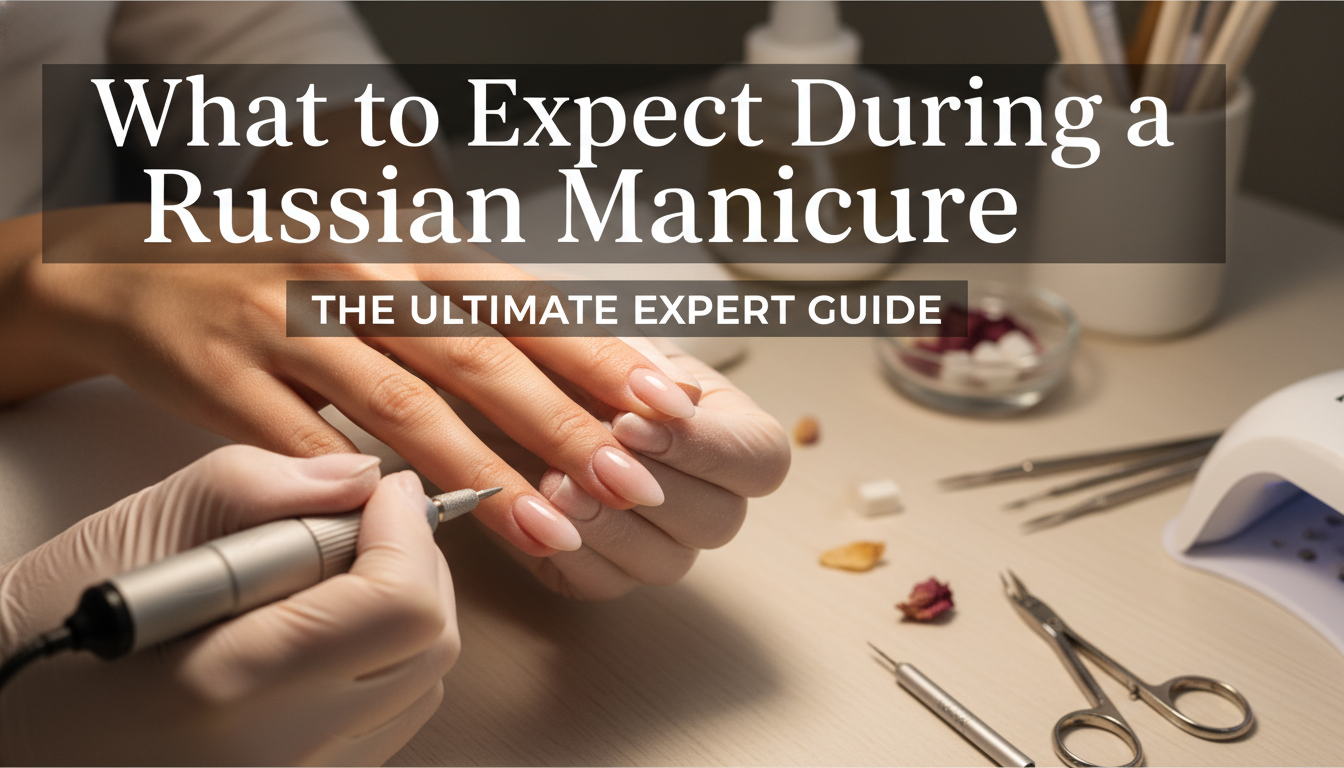
If you have spent any time on social media lately, you have likely seen videos of incredibly clean, high-precision nail beds and flawlessly applied polish that looks like it is growing directly out of the finger. This aesthetic is the hallmark of the Russian Manicure.
Often referred to as a “dry manicure” or an “e-file manicure,” this technique has revolutionized the nail industry. Unlike traditional manicures that focus on soaking the skin and pushing back cuticles, the Russian method uses surgical precision and specialized electronic tools to achieve a level of detail that traditional methods simply cannot match. If you are considering booking your first appointment, here is everything you need to know about the process, the safety standards, and the results.


What Exactly Is a Russian Manicure?
The Russian manicure is a specialized technique that focuses on the health and appearance of the entire nail bed, with a primary emphasis on the cuticle area. Unlike standard salon services, it is performed entirely “dry.” No water, oils, or soaking agents are used because water causes the nail plate to expand, which can lead to premature polish chipping once the nail shrinks back to its natural state.
The hallmark of this service is the use of an electronic file (e-file) equipped with various fine-grit diamond bits. These bits gently exfoliate the dead skin around the nail plate and remove the pterygium (the thin layer of skin that sticks to the nail), allowing the technician to apply polish much closer to—and sometimes slightly under—the proximal nail fold.
The Step-by-Step Process: What to Expect
A Russian manicure is an intensive process that requires patience. While a standard manicure might take 30 to 45 minutes, a high-quality Russian manicure usually takes between 90 minutes and 3 hours, depending on the complexity of the service.
Step 1: Consultation and Assessment
An expert technician will first examine your natural nails and the condition of your skin. They will check for any contraindications, such as infections or extremely thin nail plates, to ensure the service is safe for you.
Step 2: Cleaning and Shaping
The technician will remove any existing product and shape the free edge of your nails. Because the manicure is dry, they can see the natural shape and any imperfections more clearly than if the nails were wet.
Step 3: E-File Cuticle Work
This is the most critical phase. Using various diamond-coated bits, the technician will:
- Lift the cuticle fold to create a clean “pocket.”
- Gently buff away dead skin cells from the lateral folds (the sides of the nail).
- Remove the dry, crusty skin around the nail without cutting into live tissue.
Step 4: Polishing the Skin
After the excess dead skin is removed, a soft polishing bit is often used to smooth the surrounding skin to a satin-like finish. This prevents the formation of hangnails and ensures a soft “Photoshopped” look.
Step 5: Deep Polish Application
Because the cuticle area has been so precisely cleaned, the technician can apply a base coat, color, and top coat extremely close to the skin. Often, a thin liner brush is used to paint the polish slightly under the now-cleaned cuticle fold. This technique masks regrowth, making the manicure look fresh for significantly longer than a traditional application.
Pros and Cons of a Russian Manicure
Deciding whether this service is right for you involves weighing the impeccable aesthetic against the time and cost commitment. Below is a breakdown of what to consider.
| Pros | Cons |
|---|---|
| Extended Longevity: Can last 3 to 5 weeks without lifting or visible growth. | Time Intensive: Expect to be in the chair for at least 2 hours. |
| Prevention of Hangnails: Precise exfoliation reduces the urge to pick at skin. | Higher Cost: Prices are usually double or triple a standard manicure. |
| Clean Aesthetic: Provides a flawless, high-end look popular for weddings and events. | Risk Factor: Requires a highly skilled, certified technician to avoid injury. |
| Nail Health: Proper cleaning allows for better product adhesion and strength. | Limited Availability: Not every salon has technicians trained in this specific method. |
Safety, Hygiene, and EEAT: What You Must Know
When it comes to Russian manicures, the “Expertise” and “Trust” components of EEAT are non-negotiable. Because this technique involves working closely with the proximal nail fold—which serves as the body’s seal against bacteria—it must be performed by a professional.
Sterilization is Key
In a reputable studio, all metal bits and tools must undergo medical-grade sterilization. This usually involves an ultrasonic cleaner followed by an autoclave (a machine that uses high-pressure steam to kill all microorganisms). If you do not see a sterilization pouch being opened in front of you, do not hesitate to ask about their sanitation protocols.
The Skill of the Technician
A Russian manicure is not something that can be self-taught via a few videos. It requires an intimate knowledge of nail anatomy and “torque” control of the e-file. An unskilled technician can easily over-file the nail plate, causing “rings of fire” (red, painful indentations) or permanent damage to the nail matrix. Always look for certifications and a portfolio of healed work, not just “freshly done” photos.
Maintaining Your Results
Once you have achieved the perfect Russian manicure, maintenance is relatively simple. Because the skin around the nail has been exfoliated, it is vital to keep it hydrated to prevent it from becoming dry or brittle. Applying a high-quality cuticle oil daily will maintain the “fresh out of the salon” look and keep the skin supple.
Most clients find they only need to return every 4 weeks. By this time, the polish will have grown out slightly, but because it was applied so deep, the gap is much less noticeable than with traditional methods.
Frequently Asked Questions
Is a Russian manicure painful?
No. When performed correctly, a Russian manicure should be completely painless. You may feel a slight vibration from the e-file or a tickling sensation around the cuticles, but there should be no burning, pinching, or cutting. If you feel pain, alert your technician immediately.
How often should I get one?
Most experts recommend a Russian manicure every 3 to 4 weeks. Getting them too frequently (e.g., every 2 weeks) can lead to over-processing of the skin, while waiting too long can lead to excessive growth that may be harder to clean.
Does it damage your natural nails?
Quite the opposite. When done by a professional, the Russian manicure can actually improve nail health. By removing the dead skin that causes lifting and by using a dry technique that prevents polish from popping off, your natural nails have a chance to grow longer and stronger under the protective coating.
Why is it so much more expensive than a regular manicure?
The price reflects three things: the advanced education of the technician, the cost of medical-grade sterilization equipment, and the significant amount of time dedicated to your appointment. You are paying for precision, safety, and a result that lasts twice as long as a standard service.
Can I get a Russian manicure with regular nail polish?
Technically yes, but it is rarely done. The precision of the Russian technique is usually paired with high-quality gel or “structured gel” to ensure the longevity of the polish matches the longevity of the cuticle work.
—
Topic: What to expect during a Russian manicure
Tags: #Expect #Russian #Manicure #Ultimate #Expert #Guide